

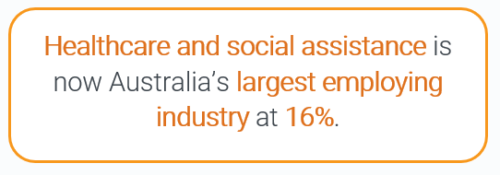
At the heart of Australia’s healthcare and social assistance industry is a growing, often invisible workforce: migrant home-care workers. These individuals provide essential support in private residences, yet their own safety and wellbeing are frequently overlooked in broader policy discussions.
A new ISCRR report, “Exploring Unheard Voices: Migrant Workers in Home-Based Care,” provides critical insights into the unique occupational health and safety (OHS) challenges faced by this vital community.
Using an innovative participatory approach in partnership with the Migrant Workers Centre and employing their bicultural community ambassadors, the research fostered a high level of trust, capturing experiences that typically remain hidden from formal reporting systems.
The findings reveal that migrant home-care workers are exposed to a wide range of physical and psychosocial hazards, including risky manual handling, unsafe physical environments, and instances of physical, verbal, and sexual abuse.
“The client took off their shoes and threw at me… ”
“I have a co-worker that, he spat on her… ”
Many workers reported experiencing overt racism and discrimination from clients and their families.
“…people from African backgrounds are sometimes assumed to have less knowledge or skills compared to others [at work]. These stereotypes can make it harder to be recognised for our abilities and can affect how we are treated at work.”
The research indicates that these risks are often compounded by organisational and systemic factors. Participants described a pervasive lack of worker-centred OHS training and a workplace culture that frequently prioritises client needs over staff safety.
Structural drivers, such as job insecurity, fear of visa repercussions, and exploitation, often discourage workers from reporting hazards or seeking compensation. Many workers reported being in “survival mode,” where the fear of losing a job outweighs the capacity to report unsafe conditions.
As demand for home-based care continues to surge, addressing these systemic vulnerabilities is critical for the sustainability and safety of the sector.
The report emphasises that meaningful improvement will require coordinated action across multiple levels, including better access to in-language information, strengthened employer oversight, and more culturally responsive engagement from regulators.
By listening to these “unheard voices,” we can begin to design a safer, more equitable system for those who care for our community’s most vulnerable.